GenAI Automates Tasks, Not Jobs
(draft) But knock out enough tasks...
In the early 1990s, I was a technology-trends research analyst serving clients in the Advanced Technology Groups of major multinationals. My beat then was neural networks, a field that was reviving after being put in a coma for a decade or two by the book Perceptrons. In the early 90s, the thorny problem of handwriting recognition looked like it might yield to neural networks really well.
Reality proved to be way more complicated. Accurate handwriting recognition turned out to be an amalgam of problems, such as ignoring the palm touching the screen; parsing words, then characters; disambiguating between conflicting meanings and contexts; and much more. Neural nets were a breakthrough for some of those elements, but needed to be integrated with other methods before reliable handwriting reco made it to market — never mind how puny CPUs of that era look from our vantage point today.
More recently, I thought radiology was a great example of a field that new pattern-recognition techniques and Generative AI might sweep through, causing mass unemployment. That is, until I read this article, which did a great job of describing the everyday complexities that make it unlikely that radiology will be taken over by GenAI in the near future.
Getting anything to 100% completion is way harder than 70 or 80%. But that first 70 or 80 can fall quickly.
So I've been using tasks as a unit of measure for GenAI's progress, not jobs. And it seems hard to argue that tasks aren't being knocked off by GenAI, one after the other.
However, that doesn't mean jobs aren't in trouble.
Stepping through the process
Let's walk it through. The first such task you successfully automate is likely a small victory. You've mastered this new technology enough to knock out a piece of drudge work. Huzzah!
If you choose tasks wisely, their automation is likely to affect more than one employee. Say the task is writing a report that requires combining information from multiple systems and offices. How many people spend how much time on that task across your company? Your challenge then is to spread the word — and the code.
On to the next candidate task. And the next. Mind you, this isn't happening serially, but rather in parallel, by many enterprising employees across the enterprise. In high-trust organizations, colleagues will share and pool the results, accelerating the pace of change. In low-trust organizations, employees will waste a lot of time and effort solving the same thing over and over.
When GenAI achieves parity with an average worker on a given task, the things keeping that task from being automated now are practicalities like: Do we have the time to do the automation? Can we validate the outputs?
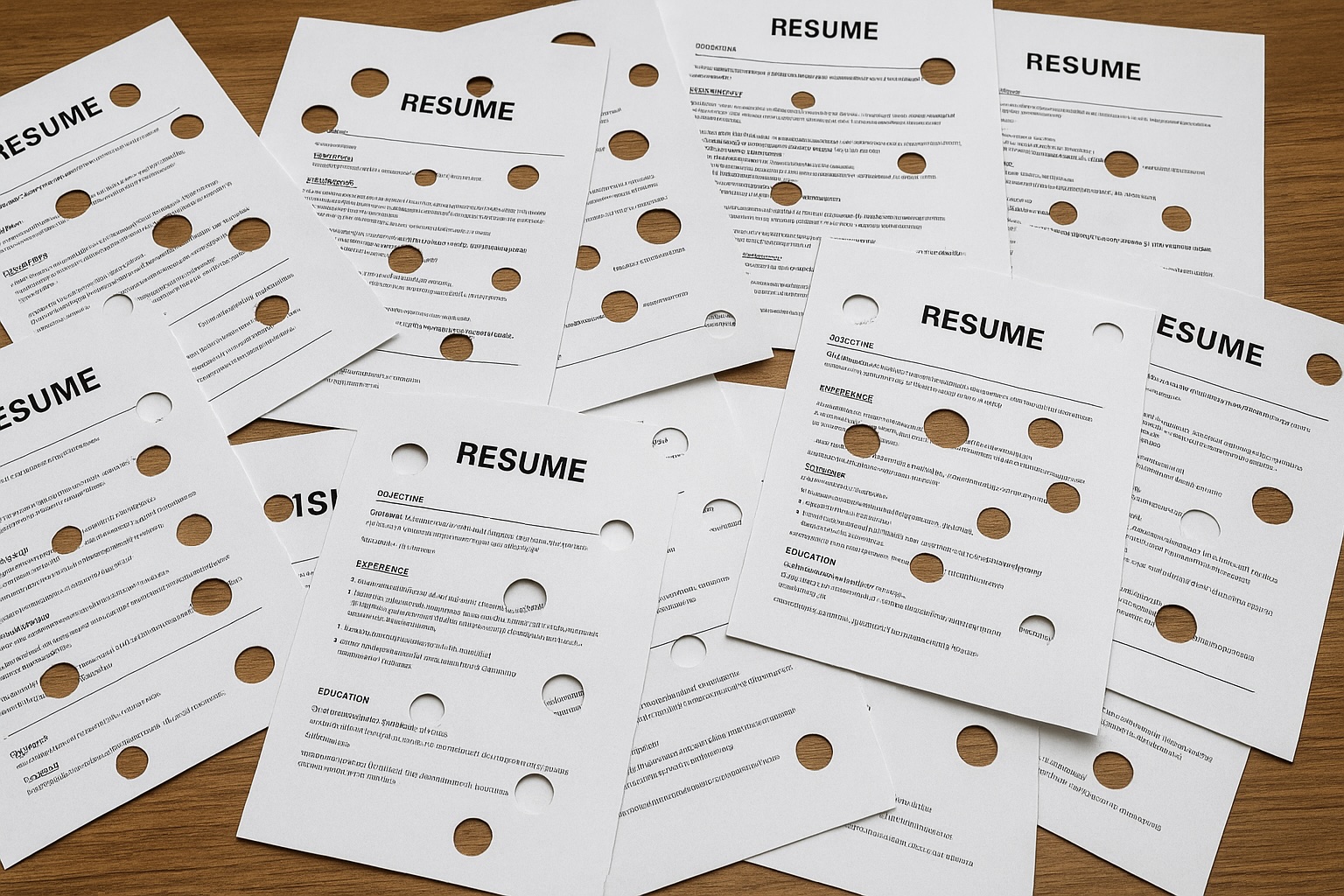
Each task that gets automated punches a hole in people's job descriptions. If you'll forgive the mixed metaphors, it's a bit of a Jenga tower: how many blocks can you remove before the tower tumbles?
In the workplace setting, how many tasks can we remove from your job description before we need to redesign your job dramatically?
Are we that flexible?
We're already seeing the bow wave of this change in large-scale job shifts, such as Salesforce saying tktktk and tktktk.
Entry-level jobs being knocked out, which is earning the moniker "the Junior Extinction," a phrase that chills the blood.
Augment vs replace.
We've been making sure people stay in their lanes and hit their KPIs or tktktk
But, but...
Experienced readers will have noted that this process should move quickly in high-trust organizations, but may bog down in low-trust ones.
Why should people aid in accelerating their unemployment? Anyone who has been watching US businesses the last few decades has good reasons to worry. This is a huge issue I'll return to in a later post.
This article is cross-posted on Substack here, Medium here and LinkedIn here. It's also here in my Brain.